
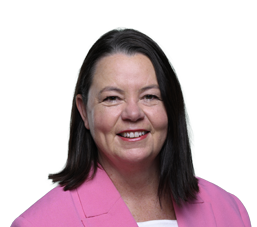
Interview with Sally Sara, Breakfast, ABC Radio National
SALLY SARA: Madeleine King is the Federal Minister for Resources and Northern Australia and joins me now. Minister, welcome back to Breakfast.
MINISTER MADELEINE KING: Good morning, Sally. And good luck to everyone with that brain teaser. It's never the obvious answer is what I've learned.
SALLY SARA: Indeed. Now, last month, the ABC revealed that Treasury had been asked to model options to impose a new levy on gas companies to tax windfall profits. Is that off the table now?
MINISTER MADELEINE KING: Look, it won't surprise you, Sally, or any of your listeners to hear me say that I'm not going to preempt any decisions before the budget is made. It's a lengthy process. It's a really involved process and we've got teams working on that through the Expenditure Review Committee and all of the Ministers and departments doing what they do at this time of year and for many months ahead of this time of year. So, modelling happens on a range of issues. So, to inform decisions of government, that may be just one, but there are many others as well. Right now, in relation to gas, there's no change in our position on the taxation of that commodity. For me, as a Minister for Resources, at the moment I'm really focused on ensuring Australians get access to affordable gas and the quantities of it that they need, that industry here needs. And we're doing that through our Gas Market Review and the domestic gas reservation policy. And that's got a bit of work to do on that, and that's keeping us very busy. And it's a very high focus of me as Resources Minister, but also my colleagues.
SALLY SARA: As Minister, why do you think the current system, when it comes to tax for the gas sector is working well?
MINISTER MADELEINE KING: Well, as Minister, I do appreciate and understand, and I've said this before on this show and others, that this is an extraordinary, complex industry. And that's not to dismiss the importance of others into this debate. But it is, it does require beyond tens of billions, like hundreds of billions over many, many decades of foreign investment, as well as some local investment, but basically foreign capital to go into these really complex systems. The pipeline's kind of the simple bit, and that's hard, but building these facilities are complex. And I'm not sure if you've had the opportunity to go to one, Sally –
SALLY SARA: – I have.
MINISTER MADELEINE KING: Yeah, I mean, you've seen the magnitude and the scale of what has to be built, the thousands of jobs in construction. And there are less ongoing jobs, but nonetheless, these facilities support communities across the country in Queensland and WA. They supported industry in the south as well in Victoria. And it's only in the universe of the Greens Party and their friends that they can say that spending hundreds of billions of dollars across the country could be considered in any way free. It's clearly an absurd proposition. And to be frank, I'm mystified as to how they get away with such tosh.
SALLY SARA: Earlier in the program, I spoke to Allegra Spender, the Independent MP for Wentworth. This is what she had to say.
[Excerpt starts]
ALLEGRA SPENDER: None of those offshore gas companies had actually been paying for offshore gas under the PRRT regime. And there is very little payment of– for the actual resource that is being sold, the Australian resource that is being sold, because I think of really a faulty taxation arrangements.
[Excerpt ends]
SALLY SARA: Do these companies pay for the resource?
MINISTER MADELEINE KING: These countries extract the resource. And to do that, as I said before, we need billions. It's over, I think it's up to nearly $200 billion of investment across decades, like 50 years, starting in Bass Strait and then moving to Western Australia and then onshore to Queensland and of course the Northern Territory. So, those billions of dollars of investment is what goes into extracting those gases. And we do have a taxation regime and it is a complicated one and we have reformed it and brought it forward.
SALLY SARA: But the actual resource itself isn't taxed?
MINISTER MADELEINE KING: The PRRT is a taxation on offshore gas. And the Queensland is onshore, so, that PRRT doesn't apply to the onshore Queensland gas. But Queensland Government collects royalties on that gas and indeed Western Australian Government will collect royalties on its onshore gas and any other state that wants to do that. So, there is a taxation on the resource. But we've got to remember what those billions of dollars of investment has delivered for the Australian people and what is, what we get out of it. And one of the things is a domestic gas supply. We're trying to make that fairer so there is more gas available in times of need and just at any old time really, for the Australian people. But over those five decades, hundreds of thousands of jobs in this industry in construction, engineering, drilling, electricians, mariners, you know, port and harbourside workers, environmental scientists, paramedics, and of course the unfortunate lawyers, accountants and management. Even PR people.
SALLY SARA: Just finally, Indonesia's Finance Minister suggested on Wednesday that three Southeast Asian nations could follow the lead of Iran and put a toll on ships passing through the Strait of Malacca. Is the Australian Government engaging with Indonesia on this? Are you concerned about those comments?
MINISTER MADELEINE KING: We are engaged with Indonesia all the time on many, many topics. Everyone will be well aware of the recent defence agreement the Prime Minister has entered into with the Indonesian Government. It's a very significant relationship. As many would know. Indonesia is closer to my home in Western Australia than we are to Canberra. So, it's a very important relationship.
SALLY SARA: But returning to the question?
MINISTER MADELEINE KING: Yeah, these reports. Yes, I understand. I've just seen those reports myself. We'll continue to engage with Indonesia on these matters and many more. What's vitally important is that these trade routes do remain open. All of them. And that's what will always be Australia's position as a nation that relies heavily on trade, as of course, does Indonesia.
SALLY SARA: Minister, thank you very much for your time.
MINISTER MADELEINE KING: It's a pleasure, Sally. Thank you.