
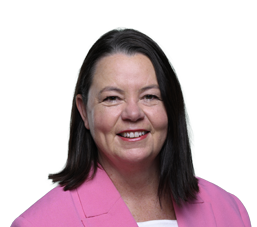
Interview with Sally Sara ABC Radio National
SALLY SARA: The International Energy Agency says it will release the largest volume of emergency oil reserves in its history as Iran has forced the effective closure of the Strait of Hormuz to shipping. The IEU says it will make 400 million barrels of oil available from its members’ emergency reserves, which is more than double the previous high released back in 2022. That time was in response to Russia’s full-scale invasion of Ukraine. Madeleine King is the Federal Minister for Resources and Northern Australia and joins me in our Parliament House studio. Minister, welcome back to Breakfast.
MINISTER MADELEINE KING: Good morning. Great to be with you, Sally.
SALLY SARA: What do you make of this announcement from the International Energy Agency?
MINISTER MADELEINE KING: It’s a really important announcement from the IEA, which seeks to have members coordinate the release of the reserves of fuel into their respective systems. And we are looking at this, as you can imagine. Minister Bowen has been acting very diligently, thoughtfully and thoroughly across this whole issue we’re seeing around fuel supplies at the moment because of the conflict in the Middle East, and he will apply that approach to this right now. But what I want to make really clear to everybody listening is all that fuel remains in Australia, like, it doesn’t go anywhere because of this request. It is a means of coordinating the release of fuel into everyone - all the members' respective economies. So people shouldn’t be misled by anyone saying we’re somehow going to start shipping fuel and we’ll have less available to Australians to use for our purposes. It will be considered, but in the main I want to be very clear – this fuel remains in Australia.
SALLY SARA: So Australia is a member of this arrangement under the International Energy Agency. How much fuel are we going to release?
MINISTER MADELEINE KING: Well, as I said, Minister Bowen will look at this request. It’s a voluntary action as to whether each member of the IEA undertakes that release. I’ve no doubt he’ll be looking at this right now, him and his team, and we are making announcements on it in due course.
SALLY SARA: So has a request been made to Australia from the IEA?
MINISTER MADELEINE KING: My understanding is the IEA has published that decision, and then each member looks at it. But I would have to leave that further detail to Minister Bowen. As you can imagine, it doesn’t come directly to me; it would go to the Minister for Energy of this country.
SALLY SARA: Australia did make a similar contribution when Russia made its full-scale invasion of Ukraine in 2022 under the previous government. The government says Australia now has more stocks than at any time in the past 15 years. Would there be any reason to refuse the IEA now?
MINISTER MADELEINE KING: Circumstances are different to what we saw in the 2022 situation. And, as you say, there are more reserves here. We will go through this methodically and thoughtfully to make a decision. Importantly, the fuel remains in this country and it’s about how each market – each country within the membership of the IEA manages their markets. So it’s an encouraging, I think, global coordination procedure that the IEA is seeking to achieve. And that’s wise. And especially when you think of the IEA has members within the European Union which has a lot of countries, they have land borders with one another, they share a market, so it makes a lot more sense there than doing the exact same thing here. Having said all that, this is a matter for Minister Bowen and his team to look into, and I know he’ll do that diligently.
SALLY SARA: Are we expecting a decision today?
MINISTER MADELEINE KING: I’m not going to pre-empt decisions of another minister. But I do know what’s happening today and I imagine right now is they’ll be considering what is in Australia’s best interests in light of this IEA decision.
SALLY SARA: Australia doesn’t meet the recommended 90 days of fuel supply in reserve. Why don’t we?
MINISTER MADELEINE KING: Well, the 90-day fuel reserve would be an enormously expensive undertaking. It is estimated to cost about $20 billion if you were to store the suggested amount of fuel for that amount of time. And, indeed, I’m pretty sure that’s almost a bipartisan position that it’s –
SALLY SARA: But other countries are able to manage it.
MINISTER MADELEINE KING: Other countries have bigger markets. So that 90-day fuel can be used more quickly. And what – anyone, any of your listeners will know if they’ve re-acquainted themselves with a two-stroke lawn mower after a long absence from mowing their lawns is that fuel does go off. So you can only store refined fuel for a matter of months. So you have to keep it moving. So if we had a 90-day – a full 90-day capacity and there wasn’t this really heavy push on demand, that would be just wasteful. And, you know, refining petrol is an expensive business. It’s a massive proposition to store so much fuel. As we know, it’s a dangerous thing to store. And it goes off. So we have assessed that what we have in the billions of litres of fuel that the government has under its minimum stockholding obligation is more than sufficient for this nation. And I would point out that shipments of fuel are arriving as scheduled. We’ve seen no disruption to that fuel supply. The Australian Institute of Petroleum issued a statement to that effect yesterday. I notice statements from the Western Australian Premier overnight that BP in Kwinana is receiving all the fuel it expects to receive.
SALLY SARA: Can the federal government guarantee that Australia won’t run out of fuel in this crisis?
MINISTER MADELEINE KING: There’s no doubt there is disruptions. We’re witnessing a conflict of the likes we haven’t seen for some time, and it’s closer to home than the conflict we saw in 2022. So we have been diligently working to make sure there are reserves, that we are in a better place across a number of energy sources, and I include gas in that as well, especially for the east coast. So there will be disruption for – the longer this conflict goes. But our government believes we are well insulated to withstand it.
SALLY SARA: So can it guarantee we won’t run out of fuel?
MINISTER MADELEINE KING: Look, I don’t want to predict that it won’t get harder, if this conflict goes along. And I really hope it ends very, very soon. Without peace we have no prosperity. So, you know, it’s very important this comes to an end as soon as it possibly can be. What I can guarantee is that the Australian government has provisioned for withstanding international shocks. Because we know when we came into government and saw the Ukraine-Russian conflict that this country was not prepared to withstand these shocks.
SALLY SARA: Madeleine King, thank you for joining me in the studio this morning.
MINISTER MADELEINE KING: Thanks, Sally, it’s a pleasure.
SALLY SARA: Madeleine King is the Federal Minister for Resources and Northern Australia.