
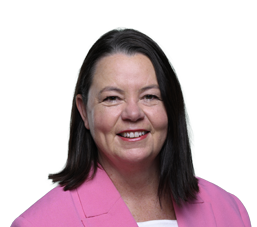
Interview with Patricia Karvelas, ABC News
PATRICIA KARVELAS: Also talking there on the very significant news of the shooting of Dezi Freeman. On Dezi Freeman, she declared today that an evil man is dead and said her thoughts were with Victoria Police, and of course, the families that have lost their loved ones.
Now to talk through the outcomes of today's National Cabinet meeting, the Resources Minister, Madeleine King, is my guest in the studio. Welcome to the program.
MINISTER MADELEINE KING: It's good to be back, Patricia.
PATRICIA KARVELAS: Are you concerned about the potential negative impacts of reducing the fuel excise, because economists say that the consequence will be we'll have more shortages, because you're making fuel cheaper?
MINISTER MADELEINE KING: Well, this government has worked ever since the Middle East fuel crisis, which has been, of course, caused by conflict in Iran ever since that moment around how we ensure Australians have all the things they need, but particularly liquid fuel.
As many of your viewers will know, all the refineries in Asia depend on crude oil for the most part out of Iran, and that area. So, it's beyond our control, but we will feel the ripple effects.
So, we've taken a number of measures, and this is the latest one. We believe as a government this is where at this current time, going through a few stages, is where Australian consumers will be able to, you know, they're starting to feel it, they've been feeling it for some time, I've got to add, at the petrol pump, we all know that, and this is quick action that we can take, it's got a quick on ramp, you know, this week, and an off ramp in three months as we really hope that this conflict subsides.
PATRICIA KARVELAS: Well, let me just dig into this, because economists are certain it will fuel inflation and that it will lead to an interest rate rise. Isn't that exactly the opposite of what you want to be doing?
MINISTER MADELEINE KING: Yeah. Look, there's no doubt these are challenging times, and you know, I respect economists and others
PATRICIA KARVELAS: But it's a real risk, isn't it? I mean, it's basic economics.
MINISTER MADELEINE KING: Economists and other commentators have views, and everyone does speculate about what might happen. We are confident this will help Australians, everyday Australians that just need to fill up their car to go to work. Everyone will take decisions about how much they drive, and some people don't have many choices.
So, the Government does have to act, we believe this will help prices at the bowser, and that with the heavy road user charge being eliminated for three months helps truckies and trucking companies get products onto those grocery stores. So, that's an important part of this as well.
PATRICIA KARVELAS: You do acknowledge there is a risk on inflation and interest rates as a consequence?
MINISTER MADELEINE KING: No, I don't think so, and you know, there is a whole suite of measures that we have applied to this issue that is storming [sic] out of conflict in the Middle East, so you know, I accept that people, economists would have concerns, but equally, I think Australians that want to fill up their car have concerns too, and they would think this is a good move, and that's why we have an off ramp on it as well.
PATRICIA KARVELAS: The off ramp is in three months. It's pretty difficult for governments to jack up the cost of petrol just in three months. That's going to be politically very difficult for you to do. Can you guarantee that you'll switch it back on in three months?
MINISTER MADELEINE KING: Look, I would say, these are just very difficult times. They're not only, I suppose, politically, but just for the community at large, as we, you know, in a globalised society, we're going to have these ripple effects.
So, we're working together with the community, with industry, all industries to make sure we get the best results for Australia in time of this conflict that has, you know, shown up global supply chains for their fragility.
So, we will take this, you know, one step at a time, we have got the off ramp in three months. Obviously, we'll keep looking at everything that comes to play and comes to be part of this.
PATRICIA KARVELAS: But the ramp, does it need to be used in three months?
MINISTER MADELEINE KING: We'll look at all options
PATRICIA KARVELAS: If it's still bad
MINISTER MADELEINE KING: We will look at all options, yeah, absolutely, and just as we make decisions to, you know, take this excise off, we will no doubt be looking at this as a - just as we'll insist and have insisted the ACCC monitor prices. Like, you know, we have to make sure we monitor all these things, collect all the data, so we know what's working in the interests of all Australians.
PATRICIA KARVELAS: Let me take you to this new power to underwrite basically buying fuel. It seems to me that the legislation's quite wide, that it's not just fuel that it could apply to. Can you clarify that? Could it be other areas where we have shortages?
MINISTER MADELEINE KING: Yes, it absolutely is, and
PATRICIA KARVELAS: Can you give me some examples of things you can intervene to underwrite?
MINISTER MADELEINE KING: Yeah, indeed. Well, we could intervene to underwrite ingredients for fertiliser production, but we're very clear, especially in regard to the liquid fuels and say other commodities that suffer shortages, is that it's not to support business as usual, this is to support an instance where there's an extreme difficulty in global markets. And this bill is something my department and my team have been working on for some time around critical minerals to make sure we could establish a strategic reserve so that we could build this industry, and I think it demonstrates how this Government's working together, 'cause we've used legislation that has gone through an extensive parliamentary process - well, internal process, to make sure it can now apply to other instances.
PATRICIA KARVELAS: Okay. So, it could be anything? Are there any guardrails?
MINISTER MADELEINE KING: Oh, there are absolutely guardrails. Firstly, there's a ministerial oversight, but also, it is around commodities that are suffering from supply disruptions.
PATRICIA KARVELAS: So, could we bring in - could we do this for coal?
MINISTER MADELEINE KING: We wouldn't need to do it for coal, 'cause we've got a lot of coal.
PATRICIA KARVELAS: Well, no, but theoretically, we have - just say we don't have a lot of coal suddenly, could we do it for coal?
MINISTER MADELEINE KING: Well, there's accountability in the system. I cannot - I mean I seriously cannot imagine this in a moment when Australia doesn't have sufficient coal for its own needs, and in fact, we are lowering our use of coal, as everybody knows, as we implement the Safeguard Mechanism. So, I really cannot imagine that, but the guardrails are the ministerial oversight, and I might add, you know, accountability of government more generally, that kind of proposition, I think, you know, would be pretty hard to try and mount a case for.
PATRICIA KARVELAS: Yeah, it will be interesting to see. Okay. Triggering Stage 3. There are four stages now that you've stipulated as part of this crisis. What triggers Stage 3, we don't actually know.
MINISTER MADELEINE KING: Well, this is the start of - well, it's not - this is the fuel energy security plan. It has been worked on for us as a Federal Government with our State and Territory counterparts, the Prime Minister is leading this response to what is this international crisis moment, really, that's affecting countries around the world.
As we move through the stages that will be a matter of intensive discussion with the Premiers.
PATRICIA KARVELAS: So, it's not clear, it's not one particular moment or metric that you can point to?
MINISTER MADELEINE KING: I think trying to pinpoint one moment is restrictive, too restrictive for the moment we find ourselves in, where the Prime Minister needs to talk with the leaders around the country to make sure everyone is moving at once, having a coordinated approach.
So, the specific metrics, I think, can restrain us too much. What I know is that the leaders of the States and Territories as well as the Prime Minister, do want that coordinated approach. We think that's really important, so that Australians right around the country can be reassured that we are all working together to make sure, you know, we see through this crisis.
PATRICIA KARVELAS: Minister, Anthony Albanese says he wants more certainty about the objectives of the war. Just level with me; do you think this is a terrible war?
MINISTER MADELEINE KING: I think it was very much justified to remove the evils of the Iranian leadership. I think it's been
PATRICIA KARVELAS: Has it continued to be justified?
MINISTER MADELEINE KING: It has been an abhorrent regime that has treated women, anyone with any kind of difference to the
PATRICIA KARVELAS: Yeah, we know that.
MINISTER MADELEINE KING: Well, that's important, that's really important.
PATRICIA KARVELAS: Yeah, but does it continue to be justified?
MINISTER MADELEINE KING: I agree with the Prime Minister when he says it would be, you know, we should have more clarity over what the next set of objectives are, and we just haven't had that from the United States.
Having said that, I do support the United States in their - and the government supports the United States in their efforts to make sure this regime is no longer.
PATRICIA KARVELAS: How can you support the United States when it's crippling Australia and Australians?
MINISTER MADELEINE KING: No, we are supporting their actions against Iran, who have killed their own people in droves. I mean
PATRICIA KARVELAS: And it's having massive consequences on the people you represent
MINISTER MADELEINE KING: Global, global
PATRICIA KARVELAS: on that basis, how can you
MINISTER MADELEINE KING: Yeah, conflict like this, yeah, absolutely does, and we have said very consistently we urge it to de escalate, but it is the actions of the United States, they are undertaking this. I do support them, the government does support them in seeking to remove this regime, who, to be honest, have threatened to close off these supplies outside of times of conflict. Like they act unilaterally against their own people and against the rest of the world
PATRICIA KARVELAS: No one would defend the regime.
MINISTER MADELEINE KING: No, no, no.
PATRICIA KARVELAS: - well, some people would, but
MINISTER MADELEINE KING: But this regime has threatened to close the Straits of Hormuz many times before without there being a conflict.
PATRICIA KARVELAS: Right now, it's this conflict that's leading to what is an unprecedented crisis in our country.
MINISTER MADELEINE KING: At any moment, that regime was prepared to do exactly the same thing as they're doing now. So, I think it would be a wise thing for the United States to go in, remove that regime and have greater access to the
PATRICIA KARVELAS: So, do you support boots on the ground, 'cause they're considering it?
MINISTER MADELEINE KING: Oh, that is up to the United States. That's
PATRICIA KARVELAS: Is that not a bridge too far for Australia?
MINISTER MADELEINE KING: That is totally up to the United States what they how they
PATRICIA KARVELAS: What is your view, though?
MINISTER MADELEINE KING: I am not going to it's up to the United States, I'm not going to say anymore than that, and I think that's important, but I think it would be a good thing if the United States and other nations had greater control over those Straits of Hormuz, and Iran has, as I said, threatened it before, they'll continue to threaten it, and if that threat is removed, that would be a good thing.
PATRICIA KARVELAS: Madeleine King, it's been great to have you in, can I say, two weeks in a row. Come back again next week?
MINISTER MADELEINE KING: Yeah, I will, thanks.