
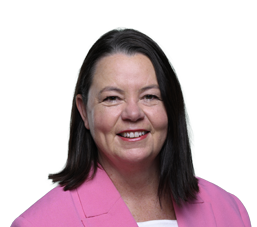
Interview with Ollie Peterson, ABC Drive Perth
OLLIE PETERSON: Well, Sarah, the Federal Resources Minister, Madeleine King, is listening in, and I'll put it straight to her right now. Welcome back to Drive, good afternoon.
MINISTER MADELEINE KING: Hey, Ollie, how are you?
OLLIE PETERSON: Well, Sarah just says there that that National Cabinet has done nothing to curb the use of fuel. Would you agree with her comment, other than just cutting the fuel excise, isn't that going to actually ramp up demands?
MINISTER MADELEINE KING: Well, it's ‑ I mean people and companies and governments will have to work together on how we do address the potential issues around getting hold of fuel out of the Middle East and out of North Asia. So I heard the listener call and talk about mandating work from home, but that's really not what we're looking at. But if people want to do that and it works for their companies, or they're not‑for‑profits, well, that's something obviously we support, but equally many people still do go to the office. And you know, we've got very good transport fares on MetroNet in Perth, so lucky. In other States, Victoria and Tasmania, indeed have made public transport free for a little while to come. So ‑‑
OLLIE PETERSON: Should we make it free here in Perth as well, in Western Australia for the next little while?
MINISTER MADELEINE KING: I think the WA Government has done a stellar job on making public transport really affordable with the $2.80 fees. It will be a matter for them to have a look at how that works. MetroNet has been a massive, massive billion-dollar project, so it's really important to respect that investment as well. But the important thing is, each State Government, including WA, but also the others, are all looking at how they best manage the fuel supplies they have and the industries they need to consider. And be that in not just industries but public services, like health, and so forth, so hospitals, all the things you need, the ports. You know, there's a lot governments have to consider. And what will be really important informing how this progresses should the conflict in Iran keep going, is the data that governments will collect and will share so we can make informed decisions on what to do next.
OLLIE PETERSON: Couldn't public servants, for example, though be directed to work from home to ease that pressure on fuel supplies?
MINISTER MADELEINE KING: Well, many public servants, you know, work together in offices, and that's where good ideas are had. So I don't think there's any need to stop that kind of work going on, or to prevent it. I imagine, and I'm not going to speak for the State public servants, that's going to be a matter for each department to decide on their own. But the thing is when people work together in offices, you know, I think, better things happen, you know, it's sort of ‑‑ it's one of those, the ways you ‑ I mean you work in a studio with people and it's much more conducive to the way a community likes to operate. And because we do have secure fuel supplies, you know, we're not there yet.
We all hope that the conflict in the Middle East stops, de‑escalates as soon as possible, but in the meantime we're preparing, indeed we're over preparing. We want to keep doing that, to make sure we do our best in all eventualities. That why I've been speaking to Ministers in Korea, in Japan and Singapore, as has the Prime Minister and the Foreign Minister and the Minister for Energy and Climate Change, to make sure that those fuel supplies are still coming to Western Australia and we'll even hope to get them to the East Coast as well.
OLLIE PETERSON: Are Japan and South Korea really going to prioritise us over their own?
MINISTER MADELEINE KING: No, I mean the thing is, obviously each country makes sure that its own people are supplied and protected, but the thing about our relationship with these countries is that we are interdependent on energy, so we export coal from the East Coast, LNG from the West Coast to make sure those economies have energy security and those communities have energy security, as well as our own. And what we trade and get back is that liquid fuel, so you know, those countries, and we've had these discussions very openly. I was in Tokyo a couple of weekends ago having these discussions. They're very, very well aware of that, and I've also made the point that this country provides protein to our neighbours, whether that be beef into Japan, into the Republic of Korea as well, as well as other ‑ and grains for that matter. And those industries, beef and grain, they need diesel fuel as well to keep operating. So that's how these international communities work together on trade, and our real focus is on that cooperative approach in the region, because once we all think we can, you know, shut the gates, or bring up the draw bridge, that's when we have ‑ we cause instability in our region. And Australia is a really trusted supplier, a bulwark of energy and we expect our loyalty and our work in doing that for this region will be repaid.
OLLIE PETERSON: Would the US, for example, though provide extra petrol or diesel for us, 'cause they've got significant reserves; have you spoken to our American allies?
MINISTER MADELEINE KING: Well, I speak to them frequently. The contracts that we have with our neighbours that have refineries in Asia are more set and established, so to speak. To the point about other cargos and supplies, that is exactly why we have today passed through the Lower House the strategic reserves bill, which enables the Minister for Trade and the Minister for Climate Change and Energy to support our refineries and import terminals buying those cargos that are not under long‑term contracts, they're what they call spot cargos that can come out of the US. And this is not a business as usual measure. This is only because the global price of oil has gone through the roof because of the conflict in Iran, something we are not responsible for but cannot avoid, and those ripple effects will hit Australia, they are hitting Australia now. So the Government is making sure we can do our best and have all the tools available to make sure that supply still keeps coming in right around the country.
OLLIE PETERSON: Right. The Federal Minister for Resources, Madeleine King, joining us live from Canberra this afternoon, 102.5 ABC Perth, Drive, with Oliver Peterson at 20 to 4. Nick's got a question for you, go ahead mate.
NICK: I'm just curious why we just keep giving away our national resource and having to buy it. Why don't we employ our own people, invest the 2 billion that you're going to give away in excise and get serious about our own wealth?
OLLIE PETERSON: So why don't we produce our own oil, Minister?
MINISTER MADELEINE KING: Well, we used to, but to be honest, the oil in this country and the sort of heavy crude oil that we need for diesel is mostly depleted; that was in Bass Strait, and that's why gas was so cheap in Victoria for so long, it was a by‑product. But also we've seen, you know, refineries around the country close over the past decade. I mean you've heard me speak about this before, Ollie ‑‑
OLLIE PETERSON: Yeah.
MINISTER MADELEINE KING: ‑‑ my dad worked in the lab at BP in Kwinana, and I've got many friends from school that worked in the operations centre. And you know, that had to close under the former Government. Our Government has fought and has provided assistance to the two remaining refineries in this country, building a new refinery is much more ‑ costs much more than $2 billion, I'm told. But the other issue is that you have to get hold of the right kind of crude oil. And whilst there is some in this country, there's no doubt about it, there is some, the Dorado field off Northwestern Australia is one, but there are others, it's still not in the volumes we would expect, and you still have to import some crude oil. I mean, to be honest, I wish we had more refineries open, I wish they hadn't been allowed to close because of ‑ I don't ‑ I can't even remember the reasons now BP did that, but they didn't get any support from the Government of the Day, and that's a crying shame.
OLLIE PETERSON: I know your time is limited. I just want to get to a couple more before you go, Minister. Can we just talk about the stages of the fuel plan, 'cause we're in Stage 2. What happens at Stage 3 and Stage 4; what's the threshold for them to be activated?
MINISTER MADELEINE KING: Well, really importantly, so Level 2 at the moment is keep Australia moving, keeping Australia moving.
OLLIE PETERSON: Yes.
MINISTER MADELEINE KING: Because that's important. Level 3 is take targeted action. But in moving between those response levels, you know, we will consult with the relevant industries, but also each government has to talk about it, right. So as you would expect, the Prime Minister would discuss with the Premiers and the Chief Ministers about any change in that response level, and they've got good relationships. We've convened the National Cabinet very quickly as needed. But importantly, it's not just about that group, that it's a very important leadership group that will ensure there is consistency across the country. It's also about talking to industries and sectors to make sure the response and the change in response is well‑designed to meet the current situation. So I know you're asking for particular indicators, but the truth is we have to collect the data, we have to see what happens in response to the measures we've already made, 'cause if you do everything all at once, all together, you don't know what's working, and you can really make it harder.
OLLIE PETERSON: Okay.
MINISTER MADELEINE KING: So we just wanted to be measured and thoughtful, considered ‑ well, I mean, for the moment, to keep Australia moving.
OLLIE PETERSON: Right. What are resources companies telling you about their access to diesel, and are you concerned about their ability to continue operations beyond mid‑April?
MINISTER MADELEINE KING: Yeah, it's different for different sectors of the resources sector. So I've spoken to many in the resources sector these past few weeks, and we had Minerals Week here in Canberra last week. So for our larger companies that are the bigger employers, they have the ability to hold a lot of diesel, so they're doing okay, and obviously a watchful eye as you'd imagine ‑‑
OLLIE PETERSON: Yeah.
MINISTER MADELEINE KING: ‑‑ 'cause the resources industry is the largest user of diesel in the country. Well over a third of all diesel in this country is consumed by the resources industry for our economic benefit, you know, right across the country as well. But for smaller users, smaller explorers and some smaller mines, they are in the same position as some of the community at large, and that is proving difficult for their operations, and that's why we have that fuel response taskforce that the Prime Minister has put in place. And under the leadership of Roger Cook in WA and his Ministers, they are looking at those needs as well every single day to make sure that that fuel gets to where it needs to.
OLLIE PETERSON: So those resources companies though, Minister, would they be considered nationally critical, or would it only be for the big players, the Rios, the Woodsides, the FMGs, the BHPs of this world, or would the smaller operators too, could they expect to be prioritised if we move to say Stage 3 or 4?
MINISTER MADELEINE KING: Well, I think we need to think that through, and obviously there's a lot of analysis going on at the moment. It would be fair to say, you know, that the larger operators employ the most people and have the most ‑ the greater ability to be able to provide for themselves if there is some kind of issue, the issue which we're seeing out of Iran. So to be honest, they might not need the support that others would. So that's something we have to look at, and that's why we are talking with the State Government, talking with the Chamber of Minerals and Energy, the Minerals Council and all the peak bodies, as well as the companies themselves, to make sure we understand who can do what with the supplies they have, and who has access to shipping their own fuel in which the, you know, your BHPs and Rios, and Fortescues and Hancock Prospecting are able to do that, in different amounts. Perhaps, and that's not the same for some other smaller operators. So we just have to balance that out, Ollie.
OLLIE PETERSON: Yeah.
MINISTER MADELEINE KING: So I'm not trying to avoid the question, it's just that there's no simple answer, I suppose. And the main thing is the whole of the resources sector is of critical economic importance, in particular the Western Australian industry. It upholds the economy and has done for decades, and you know, everyone knows that; it employs a lot of people. Equally, the coal industry in Queensland and New South Wales provide for the energy security of our near neighbours, as does the LNG in Queensland and the LNG in the Northern Territory and Western Australia. So they're all part of a regional energy security story that we really need to, as a government, I'm saying, to make sure it continues to operate as much as possible as normal.
OLLIE PETERSON: Madeleine King, thank you very much for your time, really appreciate it.
MINISTER MADELEINE KING: Pleasure Ollie, have a good Easter.
OLLIE PETERSON: You too. That's the Resources Minister, Madeleine King, joining us live from Parliament House.