
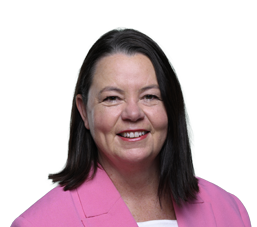
Interview with Kieran Gilbert, Sky News Australia
KIERAN GILBERT: Let’s go live to the Resources Minister Madeleine King. Thanks for joining us. Now, the Prime Minister in Brunei and Malaysia, which is obviously welcomed by the opposition and others as well, but so much of that still depends on those countries, Singapore as well, getting their imports from the Middle East, doesn’t it? They have refining capacity, but most of their oil is imported from the Middle East in the first place.
MINISTER MADELEINE KING: That’s right, Kieran. It’s good to be with you again. The truth of it is a lot of these supplies do come from the other side of the Strait of Hormuz, and that’s why we continue to encourage the parties in conflict to go back to the negotiating table so we can have an enduring peace at this moment – well, enduring, it’s a very long term. So, that’s what we all want to achieve, so that those supply lines can open up. Because these global ripple effects will be felt – are being felt in Australia, and they’ll continue to be felt for some time.
KIERAN GILBERT: And with the IMF report overnight, is that just stating the obvious, because of the ripple effects you talk about?
MINISTER MADELEINE KING: I think the report from the IMF is really important, and it gives every nation, you know, a real awareness of what we’re facing, if they weren’t already aware. As an Australian Government, we’ve been working on this since – well, since before the conflict broke out. There’s always been tensions in the area and building up ability to have that sovereign capability in so many parts of our economy. So, importantly, you know, it does acknowledge, the IMF report does acknowledge, the struggle the global economy faces. And that’s why we’re working very hard – myself, my Cabinet colleagues, my ministerial colleagues and especially the Treasurer and the Minister for Finance and their teams – to make sure we have a robust budget. And as the Treasurer said, you know, the budget we were maybe thinking of back in January and February is not necessarily going to be the same one that we do release in May. And that is because of this war in the Middle East.
KIERAN GILBERT: When we look at our sovereign capacity, I’ve had a few different views on the program today. Michael McCormack saying we’ve got to ‘drill, baby, drill’ and look as far and wide as we need to and find oil where we can and drill for it. Rod Simms was just on the program saying ‘is that the economic way to go about it? Should we be looking at other ways to improve our sovereignty?’ What’s your view when it comes to oil?
MINISTER MADELEINE KING: Well, oil is important. We’ve been a producer of crude oil, the Bass Strait has been very good for this nation, and that’s why gas used to be really cheap in the southern states. It was a byproduct of the crude oil that came out of the Bass Strait, which drove our industrial manufacturing capacity in this country. But that has declined. It’s a fossil fuel. It does run out, that’s the very meaning of it.
As to the future, you know, I’ve released acreages offshore in this country that enable companies to explore both for oil and for gas and then to take it further through the approvals process. But I think it’s really important to note, no matter what exploration you do or what drilling you do, that takes another decade for it to come to production. And that’s not because of approval processes; it’s because it takes time, and it’s really complex. So, our focus as a government right now is making sure we get the supplies right now that we need for the coming months while this conflict is ongoing.
So, I think it’s very fine for people to keep exploring. I think Rod Simms is correct – we do need to think about alternatives that do make us fuel independent. It won’t be the whole answer – we’ll always have a variety of fuels, whether it be through renewables and electric vehicles, you know, right through to the diesel machinery that we can’t run it on anything else for the foreseeable future, so we do have to keep those supplies up.
KIERAN GILBERT: Yes, well, and I should mention our viewers can see there in the corner of their screen Prince Harry at the War Memorial. Matt Anderson, the director there welcoming him. A veteran himself, Harry, of course, in Afghanistan. We’ll keep you posted and keep those pictures up for our viewers as he visits, Harry, the War Memorial on a beautiful Canberra day.
Let me ask you, Minister, before you go on a couple of other things: you’ve been talking about our sovereignty, our domestic capacity. On fertiliser, where the government is backing – Australia is backing a facility in Karratha. Meant to start next year. Why – can it be brought forward to this year, and how much of our agriculture sector will be serviced by that?
MINISTER MADELEINE KING: Yeah, you’ve referred to the Perdaman project and Karratha. It’s a big project. We’re talking with the proponents of that, and it’s in the midst of being built, as you can imagine right now. It is a project that depends on the Scarborough gas project for its imports to make that fertiliser, which is co-located. So it’s a really important industrial facility for the country. So we’re seeing how we might be able to bring it forward, but it is complex. And like the rest of the world, some of the componentry of that refinery, so to speak, is caught in other places. So, how you can fast-track that is something we’re looking at right away.
But when it comes online, the Perdaman urea project in Karratha will easily supply all of Australia’s urea needs, as well as being able to export to nearby neighbours. So it’s very important. That’s why it was very important that it went through the processes that it had to and got approval and is being built.
KIERAN GILBERT: Well, that is good news that it would have that capacity. A few issues before you go: one on the gas levy. The fair share levy, as Rod Simms calls it. Is the government open to that? And, two, on the critical minerals, $5 billion investment alongside the United States. Again, I guess that’s part of the message about Australia being a supplier of things. It might not be oil, but there are a lot of other resources that the world wants.
MINISTER MADELEINE KING: Yeah, that’s right, Kieran. On the levy that you mentioned before, so, I mean, I’m not going to pre-empt any announcements, and these discussions are – I think it’s sensible to have discussions on revenue and revenue-raising, and I certainly don’t object to that. I do think it’s important that when we have these discussions, we think of the differences between Australia as an LNG-producing nation and others. We have a different history in how we came to build this industry, and therefore, our taxation regimes are also going to be different. And at a moment where we do have - we are playing a really imperative role in the supply of LNG to our neighbours as well as, as you mentioned before, food security of both Australia and our neighbours, it is worth considering how those kind of sudden changes may affect ongoing investment in the region.
And on critical minerals, it’s really exciting the work that’s happening here, and it’s been a lot of committed work by a lot of people over many years. There’s many in the rare earths and critical minerals industry that have been hard at this for long before I was Resources Minister, and now the rest of the world is understanding how important our critical minerals are. And so, investing in these projects, like the Ardea Nickel Project in Kalgoorlie, which will increase our nickel capacity by 80 per cent. A different form of refining to what was at Nickel West, which unfortunately has shut down for the moment. So, replacing that through a different process and a different deposit is really important. And bringing in partners from Japan like Sumitomo and Mitsubishi, as well as the US Export-Import Bank, and our support vehicles will be really important. And that’s just one example of many that add up to that $5 billion you mentioned.
KIERAN GILBERT: Yep, okay. Well, we will stay in touch, keep across that investment over several years now. Resources Minister Madeleine King, joining us live from WA.