
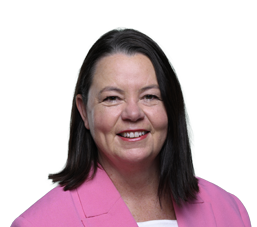
Interview with Kieran Gilbert, Sky News Australia
KIERAN GILBERT: Welcome back to NewsDay. Joining me live in the studio is the Minister for Resources, Madeleine King. The free trade agreement is done and dusted. It’s been nearly a decade in the making with Europe. The cattle industry are not happy. I want to read a couple of quotes to you. This is from Cattle Australia, “The deal that has been struck is simply appalling for agriculture.” And then this, the Chair of the Australia-EU Red Meat Access Taskforce, Andrew McDonald, says, “Australia’s red meat sector has been profoundly let down with the outcome.” What do you say to them?
MINISTER MADELEINE KING: Well, Kieran, it’s great to be here. The EU-Australia trade agreement has been a long time in the making – about eight years. And it’s taken a lot of effort. Don Farrell has worked day and night, him and his team, to get this through. And the truth is, for the agriculture industry, it is a very good result. We’ve got a diversified agricultural export industry. There are many sectors that are, indeed, very pleased with it. We’ve managed to protect, you know, prosecco wines as well as the use of parmesan, even kranski. So there’s a really important aspect to this that shouldn’t be forgotten.
KIERAN GILBERT: But red meat, these cattle producers are not happy. They’re ropeable.
MINISTER MADELEINE KING: Well, we have increased the red meat quotas into Europe by, I think, over 290 per cent. So it is a massive increase on what is currently able to go into the EU. Now, I understand it’s not exactly what the cattle industry wanted, and I’m a big supporter of the cattle industry. I’ve been to Beef Week in Rockhampton, I hope to go again. And as Minister for Northern Australia, I really understand the value of that industry. We will keep, and Don Farrell as Trade Minister will keep making sure that markets that are larger than the EU in terms of beef, like the Republic of Korea and Japan, continue to grow those markets so the cattle industry can thrive and prosper.
KIERAN GILBERT: They’re saying they just want parity with countries like Brazil. They’re saying we’re getting nowhere near the access of, say, a Brazil deal with the EU. Why haven’t we been able to match some of those?
MINISTER MADELEINE KING: Look, my understanding is that there are different standards on what type of beef is allowed into the EU. And whilst they might have higher volumes allowed under other agreements, there are different standards applying to the nature of the beef that can go in and where it came from. That’s my understanding. So what I can assure cattle – I was going to say growers – farmers, is that – and they know this – that it is a large, significant improvement on where they were yesterday in terms of what beef can go into the EU. I understand they wanted more, and it’s a very ambitious industry, and I really get that. They work really hard. It’s difficult conditions. They have withstood some really tough times. But the EU trade agreement nonetheless does get them a great deal more access to the European Union than they did before it was signed.
KIERAN GILBERT: On to separate trade issues, I want to show for our viewers this comparison – the Australian fuel and gas trade, where you’ve got the number of, you know, to Korea, for example, the fuel into Australia, $10.3 billion, $8.3 billion goes to Korea in terms of gas. Singapore 10 billion in fuel, even 6.3 billion in gas to them – I know you were there last week. And you go down the line - Malaysia, Taiwan, Japan, huge amounts of our gas going to those nations. How pivotal – and we’ve got it on the screen there – how pivotal is that relationship with those nations in ensuring the left part of that column keeps coming to Australia in terms of our fuel supply?
MINISTER MADELEINE KING: Yeah, look, you’re right to point that out, Kieran. It’s a very good demonstration for people viewing this show. What this demonstrates is our gas exports to these countries, just how important those exports are to energy security in our region. So while we – you know, these countries have invested in the billions, tens of billions of dollars into this industry to make sure they have energy security. In turn, Australia gets a great deal of domestic gas as well, so we have energy security. And my discussions with the ministers from Korea and Singapore, and, of course, Japan and Taiwan, more recently, we have had these exact same discussions about how important that energy security is maintained. And that is us providing gas, but also Australia receiving the refined fuel that we need. Quite frankly –
KIERAN GILBERT: And you’ve been given those reassurances in the last week or so?
MINISTER MADELEINE KING: Well, the reassurances we have – and it’s the same reassurance I give them – is that we’re all going to work together on this. And you would have heard that the Prime Minister of Singapore and the Prime Minister of Australia have spoken about this and then signed an agreement around how we will work together on ensuring that fuel security, whether that be in liquid fuels or in LNG supplies that Australia provides. So the main thing is we really need to work together at this moment and ensure that Australia has –
KIERAN GILBERT: But they get it, that we’ve been a good supplier.
MINISTER MADELEINE KING: Totally, yeah.
KIERAN GILBERT: So they will – you’re confident that those relationships remain very strong?
MINISTER MADELEINE KING: Very much so. It is very much in our neighbours’ interests and our regional interests –
KIERAN GILBERT: To keep supplying us?
MINISTER MADELEINE KING: To keep supplying us. Because if you think about all the resources sector, including LNG and energy resources, you know, to make that go, to make that export happen, you need the fuel for the ships, just like you need the fuel for the trucks and stuff that work on these facilities. So, as well as for the protein we provide to these countries for the farmers. So, you know, in turn, though, they rely on crude oil coming out of the Middle East to refine it.
KIERAN GILBERT: Yeah, well, that’s true, of course.
MINISTER MADELEINE KING: Further back down the line.
KIERAN GILBERT: Further back down the line. That remains the fundamental question mark of will that crude oil continue to flow at the necessary rate. Just finally, you’re going to speak to the Minerals Council tomorrow morning. Obviously, this is a big part of that message – about the need to maintain the energy trade?
MINISTER MADELEINE KING: Absolutely, maintain the energy trade, but also, of course, our work together in traditional commodities, like coal, which is energy for a lot of Asia, but also in iron ore and gold, very desirable at the moment, but also critical minerals. So that’s developing a really important way we’re getting to work together. So I’ll speak to the Minerals Council about that. It’s Minerals Week here in Canberra. I know I’m going to be – and I hope I haven’t ruined the surprise – launching the Good Guide to Critical Minerals for the MCA. And it is a really good guide.
KIERAN GILBERT: Okay.
MINISTER MADELEINE KING: So it puts Australia on the world stage.
KIERAN GILBERT: And you’re excited by that, are you, in terms of what it means for our economy?
MINISTER MADELEINE KING: I’m always excited by critical minerals and rare earths. I mean, who wouldn’t be?
KIERAN GILBERT: Yeah, exactly.
MINISTER MADELEINE KING: But I really am excited for – you know, we are strategically really important to the region and to the rest of the world in terms of LNG supplies, especially right now. And critical minerals and rare earths is that for the future.
KIERAN GILBERT: We appreciate your time. Thanks, as always, Minister for Resources, Madeleine King, there.