
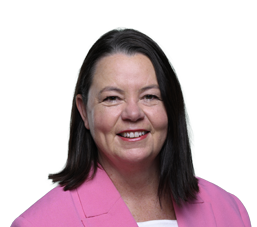
Interview with James Glenday, ABC TV News Breakfast
JAMES GLENDAY: The war in the Middle East is also disrupting global energy markets after shipping through the Strait of Hormuz, which is a critical route for the world's oil supply, came to a halt, sending fuel and liquified natural gas prices soaring. Let's have a look at what this means for Australian households, and we're joined by the Federal Resources Minister, Madeleine King, who is in Canberra. Minister, welcome to the program.
MINISTER MADELEINE KING: Good morning James, delighted to be with you.
JAMES GLENDAY: We've seen these strikes on gas facilities in the Middle East as well. What is this conflict going to do to gas bills, particularly for Australians living on the East Coast who are exposed to global markets?
MINISTER MADELEINE KING: Well, what we have done as a government since coming into government in 2022 is reform the gas market so that Australians are insulated from these shocks. When we came into government there was a massive price spike because of Russia's illegal and abhorrent invasion and war against Ukraine. Since that time we've taken action. We've reformed the Australian Domestic Gas Security Mechanism, we've also worked on the Heads of Agreement with the glass exporters in Curtis Island in Queensland, and also very importantly, as some will recall, in December of 2022 we took urgent action, recalled the Parliament to introduce the Gas Code of Conduct, and all of that worked together to keep a lid on gas prices. So as of today and earlier this week, and since the conflict in the Middle East, gas prices have remained very constant and under the $10 a gigajoule mark. So this bodes well. But I won't deny that there can be ripple effects, and we really have to keep a watchful eye on that. But I can assure Australian consumers that the Government now has the tools that it didn't have four years ago to be able to restrict the export of gas so that we can make sure that there is enough for Australians.
JAMES GLENDAY: I just want to jump into that, because there are forecasts that prices are likely to spike in the pretty near future. You're planning to have this East Coast Gas Reserve up and running in about a year or so. Are you open to bringing that forward immediately so that you can really keep Australian gas for Australian households first?
MINISTER MADELEINE KING: Well, the Australian Domestic Gas Reservation Scheme was an election commitment, and we've been working on it very hard since then. And I meet with the industrial consumers, so we meet consumers all the time through my electorate and community work, but also the industry itself; there's been a lot of consultation. It is really complex how you do set up a reservation policy, and we want to get it right. So I am open to doing this as quickly as we can, bearing in mind we don't want the unintended consequences of acting irrationally or without appropriate thoughtfulness on this policy.
JAMES GLENDAY: I guess, but if this is not in place though, are consumers going to be heading into winter and be at the mercy of global spot prices, things like that, because that is certainly the fear at the moment, given how much gas comes through the Strait of Hormuz, and of course the strikes that we're seeing on other major gas producers in the Middle East.
MINISTER MADELEINE KING: Well, a lot has changed since 2022, and I just wanted to address your point very directly. The mechanisms we have right now do address that problem about the spot price. You know, we do have the $12 price cap, we have made sure that there is plentiful supplies of gas; we've put on extra, I think it's 644 petajoules into the system. So that is assured. But just to be clear, other things have changed since 2022. There's a lot more gas from other gas producing countries like the United States and Canada, and we expect that will address some of the supplies issues because of the Qatari gas that is now stopped within the Strait of Hormuz. So that's a big difference. We're also working with, you know, the coal mines and the coal‑fired generators to make sure they work as smoothly as possible. So the circumstances of 2022 are not going to be replicated here in 2026. Having said that, there will be ripple effects, but we have the tools to manage that for the benefit of Australian consumers.
JAMES GLENDAY: Before I let you go, Minister, I'm just curious, were Australians on the submarine that bombed an Iranian ship off Sri Lanka?
MINISTER MADELEINE KING: I'm sure as all Australians will understand, the Defence Force and the Australian Government does not comment on third party deployment operations, and that's for very good national security reasons.
JAMES GLENDAY: We live in a democracy though, it's pretty reasonable, if taxpayers' money's going towards putting these people on the ships, why don't the Australian public have a right to know if our people are involved in these operations?
MINISTER MADELEINE KING: Look, I want to be clear: these are national security matters, they are third party deployment operations, and I'll have to repeat myself I'm afraid, and I do think the Australian people understand, the Government and the Defence Force won't comment on those third party deployments.
JAMES GLENDAY: Just before I let you go, we just had some passengers coming back into Melbourne Airport. They are saying there were empty seats on the plane. We've heard different complaints from different people arriving back saying it's been difficult, things like that. Are all the Australians who want to get out getting offered seats on planes, things like that; are they being dealt with appropriately, do you think?
MINISTER MADELEINE KING: Passengers that are caught up in this are dealing directly with the airlines themselves. My understanding, our Government's understanding, is as many people as possible are getting on those flights. I too have heard those reports of empty seats, I hope that doesn't last. But what we are doing, and you know, I acknowledge the really hard work of the Department of Foreign Affairs and Trade under the leadership of Foreign Minister Wong in making sure that our officials are working as best they can and as hard as they can with the airlines to make sure that people are, you know, getting out of where they have been caught unexpectedly when they may have just wanted to transit for a couple of hours through an airport.
JAMES GLENDAY: Yeah. Minister, we do appreciate your time on a very busy day for you, thank you.
MINISTER MADELEINE KING: Thank you very much.