
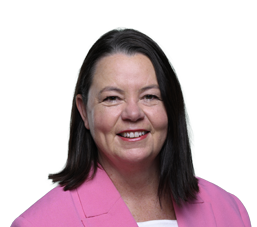
Interview with Ashleigh Gillon, Sky News
ASHLEIGH GILLON: Joining us now live is the Resources Minister, Madeleine King. Minister, thank you for your time. FIFO workers at Blue Cap Mining in your home state of WA have been told to stand down because of uncertainty around fuel supply at mine sites. The mining group AMEC warned on Sky News earlier this afternoon that will not be an isolated case. What are you doing to ensure the mining sector is protected from fuel shortages?
MINISTER MADELEINE KING: Well, it's good to be with you, Ash. As you have heard, earlier today, the Prime Minister announced the task force around fuel supply, and each and every state will be working with the head of that task force to make sure fuel does get to where it needs to be. And I know the state government here in Western Australia, under the leadership of Premier Roger Cook, is also working hard at making sure fuel is getting to where it needs to be. It is fair to say the bigger operators in the mining sector in Western Australia do have higher reserves of fuel on site, and it is a bit more challenging for those smaller operators that you've mentioned. What I do also know is that under the leadership of Minister Bowen, more fuel has been released into the system. And the priority for that fuel is to get to regional areas and to projects that need them to keep, well, the work going and the jobs going and the supplies that we need to come to people right around the country. So, I've heard about these reports about those, those smaller projects. They are nonetheless very important projects, and I'll work with the Premier and his team to make sure that those issues are addressed.
ASHLEIGH GILLON: We just heard the Prime Minister urging Australians to only take the fuel they need. Unfortunately, Covid illustrated that human nature often doesn't lean towards doing that. Some people do tend to panic, to hoard more than they need if things get much worse. How real is the prospect of rations so that fuel can be directed to where it's needed, to mining, to agriculture, to protect the economy?
MINISTER MADELEINE KING: Look, it's really understandable people's reactions in a time where they see this conflict and these pretty horrific images on the television and on the Internet. And we all hope that this whole conflict de-escalates really quickly. But the concern is real. And so, as you say, human nature is what it is, but the substances we're talking about are much different to toilet paper that you can store in your closet or whatever. Fuel is explosive. It's simply dangerous to stockpile it in inappropriate places. So, I urge everyone to listen to what the Prime Minister has said and to think of their neighbours. You know, fill up your tank as usual. If it's empty, you should fill it up, but don't buy more than you need right now. So, that's just about behaving normally, which it is difficult, I do get that. In a time of this conflict overseas, you know, people do get really worried, but I do urge them nonetheless to just buy the fuel that you need when you need it.
ASHLEIGH GILLON: You mentioned the fuel task force. The Opposition is questioning the credentials of Anthea Harris. They point out her background is as a bureaucrat, as a climate change crusader, that she doesn't have frontline industry or logistics experience. Are you confident that she is the right person for the job of running this task force?
MINISTER MADELEINE KING: I'm very confident that Anthea Harris is the right person to run this task force. She has headed up the energy regulator in the past, so she's eminently qualified. If the Opposition want to snipe from the sidelines, I guess they're welcome to it, but that's where they remain.
ASHLEIGH GILLON: The Australian is reporting that ExxonMobil has rejected the ACCC investigation as baseless. The oil giant saying that it's just really a distraction, global supply pressures. It's arguing that it succeeded or met its supply obligations. What is your assessment as Minister as to how these major oil suppliers have behaved here in Australia since the war broke out?
MINISTER MADELEINE KING: I think it's really important that all those suppliers work with the ACCC just to help them establish what is going on so that people can have confidence in suppliers. It is my experience from my work with the gas industry, we had a shortage, a problem, you know, about four years ago, that they're being open and talking about it and asking the industry to provide the information in a more collaborative manner was by far the better way to achieve the ends that we all want, which is good supply and open knowledge about what's going on. So, I'd urge Exxon and others to simply work with the ACCC, answer their requests and no doubt they will do a thorough investigation. And if there's no problem, well, there's no problem.
ASHLEIGH GILLON: So, on gas, we've been reporting on the attacks on the world's largest gas field in the Middle East. Are you comfortable with the availability of domestic supply, and how could Australia be positioned to perhaps help our neighbours secure LNG as global supplies are disrupted?
MINISTER MADELEINE KING: Yes, certainly. Look, those images are pretty shocking coming from the Middle East. That's the world's largest gas field, South Pars, that has been under attack, and another facility has also been endangered earlier today. But I can reassure all Australians that Australia is very well supplied for gas at this time and it will be into the future. And it's a very, very different situation from four years ago, where we had a spike in prices and a problem with supply. This government took action then in the face of that issue, and took action really quickly. So, right now, the gas prices on the East Coast are well below average, anywhere between about $8 and $11 a gigajoule, which is much less than the prices we see internationally. And that is because of the work this government did to unhitch international gas prices from our domestic prices. And of course, in Western Australia, it's different again. So, that's really important. I'm really confident of that supply, and we have the tools to take action should anything change in that regard. As for our international partners, they are also well supplied. A really important role Australia plays in the region is providing energy security to Japan, to the Republic of Korea, to Singapore, as well as others. And that enables peace and stability in our region. And that's what we really want to maintain right now, while we see that conflict in the Middle East.
ASHLEIGH GILLON: We've been speaking with some farmers here on Sky News. A lot of them are really worried. I know you've got one of the country's major fertiliser manufacturers in your electorate of in Kwinana. What is the latest information you're getting through about shortages and how that is going to impact farmers?
MINISTER MADELEINE KING: Yeah, CSBP play a really important role in the Western Australian supply chain for agriculture and fertiliser for that agriculture. At the moment, everything is supplied, and we expect that to remain the case. There has been adequate stockpiling. I understand there are some difficulties getting supplies to the right place, and that's what this supply task force is dealing with on the fuel side of things. But importantly, it's certainly in respect of Western Australia, the Premier's own group is making sure that the fertiliser gets to the places it needs to be ahead of that. I think it's seed sowing season, and I know that the Minister for Agriculture has said more about that.
Really importantly, this government has invested over $500 million in the new Perdaman Urea project up in Karratha. And whilst that does not come online until next March, that will provide basically fertiliser and nitrogen for your fertiliser independence for this nation. And that is a project the government has invested in through the Northern Australia Infrastructure Facility. It's a very important project, and I'm very proud of it.
ASHLEIGH GILLON: Just finally, I wanted to get your response to the New South Wales Government's decision to ban new coal mines on greenfield sites. They're going to allow those extensions of existing mines. Is that a sensible direction for the state to be heading in?
MINISTER MADELEINE KING: I've spoken to the Resources Minister of New South Wales, Courtney Houssos, about that, and of course, it's a matter for New South Wales. But what their framework provides is certainty for industry, but really importantly, certainty for the workers on those coal mines across the Hunter Valley. Those extensions will be looked at. They are by time or by geographic area. And you know, I'll leave obviously that decision-making to the state. But I'm grateful for the New South Wales Government and Minister Houssos for keeping me informed. But, really importantly, it does provide certainty for the future of that industry in New South Wales.
ASHLEIGH GILLON: Minister Madeleine King, really appreciate you making the time. Thanks so much.
MINISTER MADELEINE KING: Thanks very much, Ash.