
Interview with Sarah Ferguson, ABC 7.30
SARAH FERGUSON, HOST: Also today the Federal Government announced a Memorandum of Understanding with US artificial intelligence giant, Anthropic, aimed at boosting local skills investment and AI infrastructure in Australia.
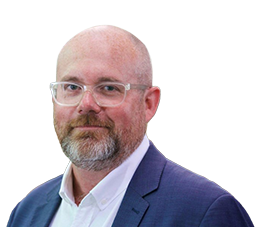
Tim Ayres is the Minister for Industry and Innovation. He joins me now. Tim Ayres, welcome to the program.
SENATOR TIM AYRES, MINISTER FOR INDUSTRY AND INNOVATION AND MINISTER FOR SCIENCE: G'day, Sarah, thanks for having me on the show.
HOST: Just before we get to AI, just a couple of questions about the Prime Minister's address this evening. Why did he choose this method of communicating with the public? Was he responding to criticism that he hasn't been seen to lead sufficiently during this crisis?
AYRES: I think what you saw was a Prime Minister determined to use his office at this moment for Australia, where of course this crisis in the Middle East is causing an unprecedented shock in global energy markets, particularly around petrol and diesel – to use his office to send a very clear message about what the Government is doing to support Australians at this time, but also to talk to Australians about what we can all do together.
There is an Australian way of approaching national challenges. The Fuel Security Plan that the Prime Minister led and took to the National Cabinet was adopted across party lines, across levels of government in the national interest, and it sets out a very clear framework for governments, the private sector, and Australians to work together to put us in the best position that we possibly can.
HOST: I just want to ask you about that, because we asked the Prime Minister on this program on Monday what the measures would be if we were to move from where we are now, which is Stage 2 of that Fuel Security Plan to Stage 3, and he said, the answer was, for example, encouragement of people to take public transport. That was his only practical message that he delivered in his speech tonight, along with the reassurance that you're talking about, but nonetheless, that was the only practical measure he mentioned. Does that mean that we have, in fact, arrived at Stage 3?
AYRES: No, we're in Stage 2, which is about keeping Australia moving, and the message that the Prime Minister had for the country, of course, was keep doing what you're doing, just use the fuel that you need, be confident and aware about the steps that the Governments in Australia, State and Commonwealth, are taking together to make sure that we're bolstering our supply chains, doing things like halving the fuel excise, removing the heavy vehicle user charge.
I thought your explainer leading into this was a very good account for Australians of what is driving these supply chain challenges and the price affecting the community. So that was a very, very good guide, and making sure that we're being clear with Australians about what they can do together; just use the fuel that you need, fill up as you normally would. That's an important message for Australians as we head into Easter, and be confident that the Government will lead here, work with the States and Territories, with the private sector as well in a predictable and careful way that's in the national interest as we move through this situation.
I want to see; I think all Australians want to see a stay in this phase and then move back to Phase 1.
HOST: Are we not –
AYRES: But this is an unprecedented shock, and we're making sure that we're ready to go.
HOST: No one has used, or no one has yet explained what the measures would be where we eventually to move towards rationing; is that out of a fear of causing panic in the community, or have you not actually gamed out those steps?
AYRES: No, there's a lot of detailed work, of course, within Government, and within the States and Territories around fuel, around issues like fertilizer, and working with industry to make sure that our supply chains are as strong as possible.
You'll recall, of course, at the beginning of this, it was very clear that the Minimum Stockholding Obligations that the Albanese Government had implemented meant that we had a shock absorber in our economy on these fuel questions. The amount of fuel that we have has not substantially changed over the course of the last month. We're obviously not complacent about that, and we will make judgments over time, not in a rush, not in a knee‑jerk kind of way, not in a political way, but in a way that maximises Australia's position.
Those new rules that we announced for Export Finance Australia to make sure that Australia's in the front of the queue when we're seeking –
HOST: Yes, for buying –
AYRES: – ship‑loads of fuel and fertilizer –
HOST: – fuel on the spot market.
AYRES: – are absolutely vital to strengthening our position.
HOST: Let me just ask you this, because you referenced there the piece that came beforehand. Is Australia going to have to have at the end of this – let’s assume that there is some conclusion to this in the near future – is Australia going to have to fundamentally re‑think its vulnerabilities when it comes to vital products like fuel, but also the other products that travel from the Gulf?
AYRES: Well, of course, we are in a series of areas in the economy, the Future Made in Australia agenda, the biggest pro‑industry plan in our history, is all about making sure that we make more things here in Australia to make Australia stronger, build our industrial capability and deliver good jobs.
HOST: It hasn't stopped us from being vulnerable to a fuel crisis in the Gulf.
AYRES: Well, let me give you an example of exactly where it has had immeasurable effect for Australian industry. The intervention in the Mount Isa Copper Smelter, late last year, means that the fertilizer production that is attached to that business at Phosphate Hill – before our intervention, it had zero buyers, and it was slated for closure today. Because of our intervention, the Albanese Government, the Queensland Government, working together, and the announcement that we've made to reserve Australian gas for Australian industry and Australian households, there were five buyers, and that sale was executed just a few weeks ago. That means that our only producer of MAP and DAP fertilizer, vital for Australian agriculture, is still functioning today. That's Future Made in Australia resilience making Australia stronger. Then, at the Boyne Island Smelter, 3,000 jobs, our aluminium industry powering on, our economic slam dunk for Queensland in terms of jobs, in terms of aluminium production, making metals rather than just exporting products overseas, making Australia stronger and delivering more investment from Rio Tinto, $7.5 billion of additional investment in the electricity generation and infrastructure –
HOST: Tim Ayres, I don't want to interrupt you –
AYRES: – like it's –
HOST: – but I do feel like I need to move on to AI, or I would have done some false advertising when I introduced you. You have signed this Memorandum of Understanding with Dario Armodei, the leader of Anthropic today. There is no mention of copyright in that Memorandum of Understanding. Why is that?
AYRES: That's because Australian copyright law applies now. We've been very clear about this copyright question. Owners of intellectual property and copyright in Australia, whether it's authors or musicians, academics or media organisations, do have a right to enjoy the benefits of their creative input; Australian copyright law protects.
HOST: But Tim Ayres, are you taking Dario Armodei at his word when he says he's not here to change your mind about copyright, because other major AI companies are doing deals with content creators in Australia, but not Anthropic. Are you just taking him at his word?
AYRES: Well, we've been very clear that Australian rules and the Australian law applies. We will not be, for example, introducing a data mining or other kind of exemption; we've been very clear with the creative community and with the tech sector as well.
I want to see copyright holders properly reimbursed for the work that they do. They work just like everybody else, and that's the position of the Albanese Government around these issues. More broadly, the Memorandum of Understanding does deliver on the Albanese Government's ambitions here, it delivers on the ambitions of our National Artificial Intelligence Plan, and the expectations that I and Assistant Minister Dr Charlton released just a week ago in relation to electricity generation and additionality from data centre developers have been signed up to by –
HOST: Well, let me ask you –
AYRES: – Anthropic today.
HOST: Let me ask you about that, because you've accepted a pledge from Anthropic to upgrade power grids where necessary for these vast or very powerful data centres. How do you enforce that? It's only a pledge from them, and you know the Australian public doesn't trust large tech companies.
AYRES: Well, at the end of the day, it's a pledge from them that matches what it was that we said in our expectations would be required for the Government's support.
HOST: So how do you enforce it if they don't?
AYRES: Well, at the end of the day, of course, this requires cooperation between the Commonwealth Government and the States, and the States have been clear about this. The response to the Data Centre Expectations from the States was absolutely enthusiastic support, because they don't want to see a race to the bottom between the States in a race to secure data centre investment. They want to see consistent standards, and if a 600 megawatt facility needs to be built, then we want to see additionality, more electricity generation and support for transmission infrastructure, and at the end of the day that will be delivered through the Commonwealth Government and the States through their approval processes, making sure that happens in a way that delivers compliance and delivers real benefits from artificial intelligence for Australians.
HOST: All right. Tim Ayres, we'll have you back on again to talk about jobs. Even Dario Armodei raised the issue of people losing jobs. We know it's a major concern in the country, but there's a great deal going on in the world. Thank you very much indeed for joining us.
AYRES: There's lots to talk about, Sarah. I'd be delighted to come on any time.
HOST: Thank you.