
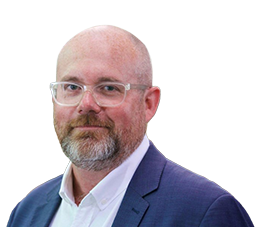
Interview with Sally Sara, Breakfast, ABC RN
SALLY SARA, HOST: US President Donald Trump says the US Navy has taken custody of an Iranian-flagged vessel that tried to get past the American blockade in the Strait of Hormuz. In a post on Truth Social, the President said US Forces have stopped the ship “by blowing a hole in its engine room”. The United States has kept a blockade of Iranian ports in place while Iran lifted and then reimposed its own blockade at the weekend, firing on several civilian ships. Tim Ayres is the Federal Minister for Industry and Innovation, and the Minister for Science, and joins me now in our Canberra Parliament House studio. Minister, welcome back to Breakfast.
SENATOR TIM AYRES, MINISTER FOR INDUSTRY AND INNOVATION AND MINISTER FOR SCIENCE: G' day, Sally, Good to be on the show.
HOST: How concerned is the Federal Government about these latest developments out of the Strait of Hormuz?
AYRES: Well, it's a very volatile situation, to say the least. That's why the Australian Government has been calling for de-escalation and a cessation of hostilities and why we’ve been working so hard on these fuel and fertiliser security questions, not just here in Australia, but in the region, to do everything that we can to provide a shock absorber to cushion Australia and Australians from as much of what is clearly the largest energy shock in our history.
HOST: How concerned is the Government about the effects of the latest escalation on fuel supplies and prices here in Australia, the possible knock-on?
AYRES: Well, it's important, I think, not to focus on the daily see-sawing of activity.
HOST: That affects the price of oil, though, doesn't it, in real-time?
AYRES: Of course it does. I just say that because events move very fast and our job here as the Australian Government is to focus on what it is that we can do in fuel security terms now, but also to invest in the future to build energy resilience in Australia and build our industrial capability to shape a future that makes Australia more economically resilient and stronger.
HOST: When this crisis is over, is it the Government's view at the moment that we will need a larger stockpile in the future? Does that seem to make sense now?
AYRES: Well, certainly. We've announced today, for example, that the commencement of the National Reconstruction Fund's investment capital that is there for Australian industry to invest in energy resilience measures. That's $5 billion there for that purpose, $1 billion for short-term loans, for firms in the supply chain that are facing immediate cost and cash flow pressures. So, we're acting in the immediate term, but also for the long term. We have a big agenda in economic resilience and building industrial capability. And you can expect that the Albanese Government will continue to be ambitious for Australia's industrial future.
HOST: In terms of the current situation with Donald Trump now saying that the US has taken control of an Iranian cargo ship. Is the ceasefire essentially over in Australia's view?
AYRES: Well, I mean, I can't offer a real commentary on those questions. Nor can you, nor can any of us. Time will tell what happens here. It's why the Australian Government has been focused on calling for a cessation of hostilities, calling for de-escalation. It is not in the interests of the global economy or for peace and security around the world for this conflict to continue.
HOST: The longer the Strait stays shut, does it give more reason for the Government to consider extending the temporary changes to fuel excise and the Heavy Vehicle Road User Charge for cost-of-living relief?
AYRES: Well, they've been really important measures for cost-of-living relief and also for the trucking sector. They had an almost immediate effect on prices for households in the lead-up to Easter. We made that announcement in a way that meant that they're time limited. Obviously, we'll continue to watch very closely these developments. The $1 billion that we've announced today for short-term loans will apply to freight and logistics. So, diesel users who are facing sharp increases in their operating cost and have cash-flow problems, we are determined to make sure that they trade through. We don't want to see business casualties. We want to see – we're in phase two and that's all about keeping the Australian economy moving. That's what those measures are designed to deliver.
HOST: Dozens of business groups have today called on the Government to set a target to cut red tape by 25 per cent by 2030. They say federal regulations cost businesses $160 billion every year in compliance. Will the Government consider a target of that nature?
AYRES: Well, we'll keep working with the business community. I will give you two practical examples on red tape reform. Number one, the announcement that we make today, $1 billion in short-term loans that will be available through firms’ normal banks. You don't have to apply to Government for those loans. You apply with the normal customer relationship that you have. And that means that they will be able to assess you very, very quickly indeed. Money should be flowing to firms that need it within a few days. That's the intention of those reforms. So, sweeping away those kind of red tape barriers there. Five hundred nuisance tariffs abolished by this Government. We are all about making sure that firms and workers can get every opportunity in the Australian economy.
HOST: So, to come back to the question, would you consider this target by 2030?
AYRES: Well, let's wait and see what the Budget announces on these questions. I understand the ambition of the business organisations in this area. Their public contribution and their private urging on these questions is welcome.
HOST: How much red tape cutting should industry groups expect in the Budget?
AYRES: Well, I guess you have to wait for the second Tuesday in May, Sally. We'll work through those issues.
HOST: Would you like to unburden yourself with these details?
AYRES: Well, I'm a relatively new Cabinet Minister, but I've been paying attention. You shouldn't front-run the Budget and I won't do it here. But obviously it's a good thing to have the Australian business community urging for less red tape. That's welcome.
HOST: Tim Ayres, thank you very much for joining me.
AYRES: Thanks, Sally.
HOST: Tim Ayres is the Minister for Industry and Innovation.