
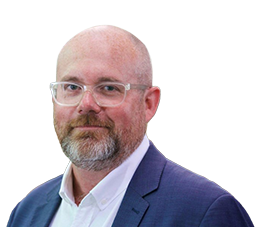
Interview with Hamish MacDonald, Mornings, ABC Radio Sydney
HAMISH MACDONALD, HOST: Tim Ayres the Industry Minister. He’s here this morning to talk to you.
SENATOR TIM AYRES, MINISTER FOR INDUSTRY AND INNOVATION AND MINISTER FOR SCIENCE: Good morning Hamish, really good to be on the show.
HOST: You’re announcing today that businesses can access more than $6 billion in finance through the National Reconstruction Fund. What’s that for specifically? What’s that telling us about how long you’re expecting this whole sequence of events to roll out?
AYRES: Well, just over $5 billion of that amount is available for manufacturing firms investing in energy resilience measures, capital investments to drive down their costs of electricity and improve our overall energy security. There's $1 billion there for short-term loans for firms in the supply chains facing cost pressures, facing short-term cash flow issues. That will be available through their banks. So, the big four banks plus the Bank of Queensland and Bendigo Bank will have short-term loan facilities, zero interest for Australian businesses to make sure that they can make their way through this set of challenges.
HOST: But we don't know how long it's going to go on for, I suppose, is the issue that so many of us are confronting. How long are you, I suppose mentally, preparing yourself in terms of decisions, backup plans, back-up-upon-back-up plans?
AYRES: Well, as you can see, this set of measures will endure for as long as this set of challenges are there, particularly the $1 billion short-term loan facility. Long-term, this is all about investments in Australian energy security and making sure that our energy advantage is the source of future competitive advantage for Australian manufacturing – that Future Made in Australia vision, you're re-industrialising particularly our outer suburbs and our regions, that these are long-term investments.
HOST: When we talk about localised supply chains, what do we actually mean? Because so much of what we consume, so much of what we make goes elsewhere or comes from elsewhere. Even if it were sort of more localised within the region. What's the vision that you have on that score? Like do you think we need to sort of end-to-end be making things here in Australia?
AYRES: Well, let me give you a practical example. The Albanese Government together with the Crisafulli Government, intervened in the Mount Isa copper smelter. That intervention secured the future of that facility. So, we've got copper smelting and metal making here in Australia, but it also delivered the co-dependent Dyno Nobel fertiliser facility at Phosphate Hill. So, one facility relies upon the other for its byproduct of sulfuric acid, from that smelter goes to making Australian fertiliser. That fertiliser facility was slated for closure on the 31st March this year and because of our intervention, Future Made in Australia intervention led by the Albanese Government – Australia is continuing to manufacture fertiliser here on the east coast. Absolutely critical for our agriculture sector.
HOST: Senator Tim Ayres is here, he's the Industry Minister. You'll be seeing the headlines rolling in this morning. They're coming pretty thick and fast. The US appears to have seized an Iranian vessel. The Iranians now saying that they're not actually committed to this next phase of peace talks, that the US is sort of dressing up aggressive acts as diplomacy. This doesn't bode well, does it?
AYRES: Well, it's a very volatile situation, to say the least, Hamish, in the Middle East. That's why the Australian Government has taken the approach that we have. Of course, we are calling for de-escalation. We want to see the conflict end.
HOST: Do you get the impression the Trump administration wants this fighting to stop?
AYRES: Well, it's a time-worn phrase, isn't it? Not to offer commentary on what's happening with our partners overseas and around this conflict. What we can do in the interest of Australians is urge for de-escalation, urge for a cessation of hostilities. It's in nobody's interests in the global economy for this conflict to continue and to work hard for Australia and Australians in the region.
HOST: You're listening to Morning on 702, ABC Radio Sydney. Tim Ayres is here. You're also the Minister responsible for data centre regulation. Huge amount of water, electricity being used, increasing fears about their environmental impacts. A lot of these centres are planned for Sydney, many of them already being built. What would you say to people that live in this city that are concerned about the impact of these enormous centres?
AYRES: Well, just a few weeks ago, I released the Data Centre Expectations on behalf of the Australian Government, and we've seen those provisions being picked up in MoUs and indeed in the behaviour of a range of the big data centre operators. Those principles do go to additional electricity generation. What the Australian Government wants to see, and I'm pleased with the level of cooperation that we've got thus far, is data centres that invest in Australia, delivering additional electricity generation, making sure they've got effective water security measures and that they're delivering for the Australian tech sector.
But it needs to be on Australia's terms. And those Data Centre Expectations are an important outline of principles that sets out, particularly on energy security, if you're building a data centre here in Australia, we want to see you investing in more new electricity generation to power your data centre and put downward pressure on prices in the grid.
HOST: But one example, during a recent parliamentary inquiry in NSW from Lane Cove Council. They were expressing concern about brownouts and blackouts increasing in Lane Cove West since the expansion of data centres. I mean, you must be alive to those concerns.
AYRES: Well, that's why we've acted so firmly to set out these Data Centre Expectations that will deliver additional electricity generation and investment in the grid and in transmission. Now the rubber hits the road of course, in our engagement with the States on these issues, making sure that the States are reflecting those expectations in their approval processes have been a very positive response from the States.
HOST: I want to play you a little bit of what Ed Husic said to us on this program earlier in the year. He's got big concerns, as you would know, about data centres, many of them here in Sydney:
ED HUSIC: I'm concerned the country has been used as a bit of an escape hatch where a lot of US tech, knowing that they can't build these data centres on home soil, are going, okay, who's the next market that we can actually load these data centres off onto? And we're going, yeah, bring them here, without thinking what the impact is.
HOST: Are we the dumping ground for these things because there's so much controversy about them in the US?
AYRES: Well, Australia is a very good place for data centre and tech sector investment. We've got enormous reserves of land and space, solar and wind, and renewable energy storage backed up by gas for new data centre investments.
And we're close to the fastest growing markets in the world. And it's in our interest to secure as much of the tech stack here so that we're not just consumers of offshore artificial intelligence or the offshore digital economy, that Australia is part of shaping this with our partners and our friends around the world.
It's not in Australia's interest to step backwards here, but the Data Centre Expectations make it very clear that in order to secure investment in Australia, to be on the fast track to have Government support, that data centres must provide for additional generation. That's where some of the overseas jurisdictions have ended up in a pickle because they haven't had those expectations and that clarity with the investment community.
HOST: Tim Ayres, thank you very much for your time.
AYRES: Thanks, Hamish.