
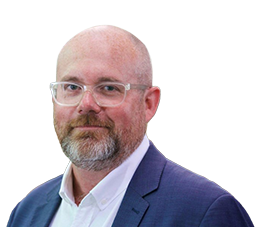
Interview with David Reilly, ABC Hobart
DAVID REILLY, HOST: Well, it looks like Liberty Bell Bay could be out of limbo – could be, if these negotiations succeed. It is Australia's only manganese alloy smelter. It's been mothballed, I think, for nearly a year now, workers basically getting by on Government support. Some more funding's been stumped up, and now there's some negotiations underway for a buyer.
Senator Tim Ayres joins us now, Federal Industry Minister. Senator, good morning.
SENATOR TIM AYRES, MINISTER FOR INDUSTRY AND INNOVATION AND MINISTER FOR SCIENCE: G'day, David, really good to be on the show.
HOST: So, well, good news potentially now that we've seen that the administrators have named a preferred buyer and negotiations are underway. How optimistic, though, are you that this could actually lead to a sale and to long term viability?
AYRES: Yeah, well it's certainly welcome progress, and it's progress that's been – just think about the workers who have been working in this plant for a second. Through long-term uncertainty here, they have stuck to the job, they have supported each other, they have worked with their trade unions and the plant management. The people who are leading this facility have been working hard on these questions too, right through the period of GFG's ownership through this administration.
And the reason this is a viable sale – of course, it's really important, the joint package that Jeremy Rockliff and I announced yesterday – but it is a credit to them of their commitment to the facility and their commitment to each other that this is a viable facility with a pathway through now to a potential sale.
That is a real credit to everybody who's been involved. It's not a guarantee of success. There's still lots of hard work to do here. But I do want to really credit the workers and the unions and the local management and the people in the community and the supply chain who have stuck together up there through a very, very difficult situation.
HOST: If the negotiations fail, what then?
AYRES: Well, of course, as I say, this is not an easy situation here. This is – it's a high-quality facility. It does require a credible pathway through a commercial sale.
We are throwing everything at supporting workers and the administrators and that sale process to make sure that it's got the best possible chance of succeeding. It matters for Northern Tasmania and that Bell Bay community, but it matters – you know, it's a significant part of Australia's industrial capability. And it's also a facility that is an efficient, capable facility. It is not in this position because of anything that the workers have done wrong here or that the local management has done wrong. The two governments, the Commonwealth Government and the State Government, have been working together carefully on this set of questions. It is in this position because the previous ownership have undercapitalised it and have not done the right thing by Tasmania and by that facility.
HOST: 936 ABC Hobart. You're with Tim Ayres, Federal Industry Minister, and we're talking about Liberty Bell Bay, its future, now that negotiations are underway for a potential sale. A preferred buyer has been identified: $15 million worth of Tasmanian taxpayer-owned manganese ore just sitting piled up on a wharf waiting to be processed. When will it be processed, and what is the long-term viability? When do we restart the furnaces is really I suppose the question.
And this is a deeper question about Australia's sovereign manufacturing capability. You touched on it, Senator. I mean how important – actually how important is manganese manufacturing to Australia? It’s our only manufacturing facility. At what point, I suppose, is the deeper question, does the Government say, "Look, maybe it's time to nationalise this production", or is that completely off the table?
AYRES: Well, the only viable approach here is a commercial sale to a commercial owner who will operate it in a commercial kind of way. That is the pathway ahead for this facility, and the administrator is working hard with the two Governments, with the unions, with the prospective purchaser to deliver that result.
You know, it is – it's the old TEMCO, for your listeners who might not be familiar with the Liberty Bell Bay previous ownership. It's the old TEMCO. It's a facility that uses Tasmanian electricity, Tasmanian workers to process manganese ore from the Northern Territory that is an input into the Australian steelmaking, but also exported in particular to the United States.
Now it hasn't been producing for quite some time now, you know, so our steelmakers have had to source manganese from other places around the world. And our steel industry's an important national capability.
The Albanese Government over the course of this term has conducted a series of significant interventions to preserve foundational Australian industrial capability right around the country, including in Tasmania. Not far from your studio there, the Nyrstar facility in Hobart has been the subject of that kind of intervention as well. To make sure that in a disrupted global environment, where there are unfair trading practices around the world, that Australia is on a level playing field and that we retain that capability for our future economic resilience.
We have the largest pro manufacturing policy package in Australian history, the Future Made in Australia package. That is there to build the future of manufacturing. But of course we're making sure that those foundational capabilities are still there.
HOST: Of course, Senator, the key question for the new buyer is, is there a market for this product at the cost that we can produce it at? How competitive is our manganese? Based on what you've seen, and the company's obviously going to be poring over those numbers, but are we even competitive in the global market?
AYRES: Yeah, there's – well certainly this facility has a long track record of exporting particularly into the United States. It has been a competitive facility. It does have really strong capability and really strong prospects. That's why this buyer is engaged in this process and that's why there was much broader interest from the market that the administrator had to assess.
So I do have some confidence that there is a strong commercial future for this facility. It can't be guaranteed. That is the subject of commercial discussions between the administrator and the new owner, but what they will buy is an efficient facility, a committed workforce, and with a track record of exporting around the world, including to our partners in the United States.
Now there is a tendency in Australia, particularly here in Canberra, for politicians, particularly conservative, you know, One Nation, Liberal, National Party politicians, to talk down Australia's manufacturing competitiveness. That is not my experience. I've been around Australian manufacturing for 30 years. We have extraordinary manufacturing capability.
HOST: Right.
AYRES: We face a tough environment, but actually what we've got to do as Australians, if we're serious about backing Australia and being patriotic – we’ve got to talk up our manufacturing workers and our manufacturing capability, because that's how we shape a better future for the country.
HOST: Tim Ayres, we do have to crack on. Just a question without notice, and I'm sorry to drop this on you.
AYRES: Uh oh.
HOST: But I think you were listening in to some of the conversation about what your State counterparts are proposing for Tasmania, and I understand industry is adjacent to, but not directly, transport; State Government or State Labor wants to bring our Port Authority back under – as part of a government department – basically, no longer a government business enterprise – and strip the TT-Line of all its assets, its port infrastructure and so forth. I mean is that really a viable solution? Have you seen other instances where port authorities have been handled that way around the country, and does it work?
AYRES: David, I was really terrified that you were going – I had been listening to your previous discussion, and I was terrified you were going to ask me a question about what perfume or aftershave people wear in a workplace context.
HOST: But you can answer that too if you want.
AYRES: Well, I'm an Old Spice kind of guy, I reckon. I'm not across the announcement that Josh made yesterday, but I do say that for Tasmania in particular, as an island state that is part of the largest island continent, shipping security and security of supply – we’re in an environment where we're facing the largest global energy shock in our history – the kind of investments in supply chain security do go to transport.
But I'm in no way across the detail of this, and I don't want to – I've never made a habit of commenting on something that I'm not across. I will read this with interest and very happy to talk about it next time I come on.
HOST: All right, Senator, thanks for your time this morning.
AYRES: Thanks, David, see ya.
HOST: Tim Ayres there, Federal Industry Minister.