
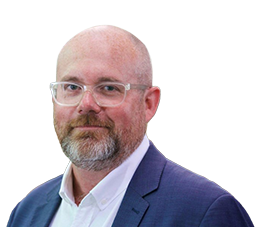
Remarks at the Business Hunter Infrastructure Lunch
I’d like to begin by acknowledging the Traditional Owners of the lands on which we meet, the Awabakal and Worimi people.
The Hunter Valley is a place that I have spent a lot of time in my industrial life; 30 years and counting now, in and around Australia industry and manufacturing.
I love coming to these events. I might have taken it to extremes; over the course of the last six weeks, I've come here twice. It's not so much because I get an opportunity to talk to you, though I will do that for 10 minutes or so. But it's because that opportunity to have a discussion with you, and to learn from you, has been so important to me and the Government's work in this portfolio. So, I'm really grateful for that introduction.
It's good to be here with Meryl Swanson and Sharon Claydon, our two local members, and Greg Piper as well. Jeff Drayton, my old friend from Muswellbrook, who's such a strong advocate for not just that community.
And you can see it in Bob's presentations, but also when you are on the shop floor in these communities. Sure, we’re fixing the Budget, and we are here to talk about the economics, investment, all of those questions.
But what I sense in the Hunter, whether I'm on a workshop floor or talking to you as one of the business owners here, or at the University or talking to civic leadership, is that there is a real sense of national pride in the work that you do and what it means for the country.
That kind of blue-collar pride – not exclusively blue collar – but there is a sense of that blue-collar pride here in the Hunter, in work that production workers and metal workers and tradespeople and engineers and scientists and people more broadly in our economy do. That is a defining characteristic. It’s something that I've always been proud of and learn a lot from.
It is Australian Made Week this week. I was at the Melbourne Cricket Ground, on the pitch, actually. It was fantastic, pretty good. There's some pretty good things in this job. I'm not really an AFL kind of guy, but I got to kick a goal at the MCG, at this this big event that the Made in Australia team had scheduled as we've put a whole lot of additional resources behind that advertising program.
And the posts that I kicked this goal from – not a long way up – were made in Australia by an Australian company that makes flag poles and footy posts. It's made from aluminium that they source from Capral Aluminium and it's aluminium that comes from the Tomago and Boyne aluminium smelters. [indistinct].
That Made in Australia story – you still get asked the same questions by journalists and the same criticism from my conservative opponents. As if it’s a hard thing to do to buy Australian. There's some kind of deficit narrative that we tell ourselves about us being uncompetitive, but that is not the truth when you look around the industry here in the Hunter Valley.
That is not the way that we think of ourselves or that you think of yourselves in your individual businesses. This kind of story that conservative politicians have been telling each other and the Press Gallery for so long; that Australia has just lost this industrial capability because, you know, overseas forces have been more competitive than us. That is not a way to build a country, to build a Future Made in Australia. We actually need to have a bit of confidence in each other, in ourselves. So, sure, buy Australian, absolutely. I think we're pushing on an open door, with that buy Australia message. But people want to have confidence in each other, confidence in the future and in Australian industry.
And that is why we have the biggest pro-manufacturing package of any Australian Government.
I was at VeraSys this morning in Medowie with Meryl Swanson – a small grant, $2.2 million grant for that business. They will scale up from 8 staff to 23 staff. They'll be manufacturing AI-enabled drones, here in the Hunter Valley, right next to the airport. So, we can't fly on their link. I think we've got to go up the road a bit before you can sort of get them up in the air.
Those will be AI-enabled drones that will support our agriculture community by being able to identify invasive weed species.
That means farmers aren’t wasting a whole lot of diesel tracking down weeds and a whole lot of herbicide knocking them over. It will lead to productivity gains in our agriculture sector and investment in manufacturing jobs.
A pretty high-tech manufacturing job of building drones with all the kind of dual-use capability that comes with drone technology. Different payloads, able to do different kinds of work. That is, in a practical sense, what this Government is really about when we talk about the Future Made in Australia program.
And this is a Budget that is, really, two Budgets in one. It is a Budget that has been developed over the course of the last 10 months, the back end of which has been characterised by the violence that has come to world markets from this conflict in the Middle East and is the biggest global energy shock in our history. I want to come to some of those issues in a minute but the forces of that on the Budget are important.
But it's also a Budget that is designed to meet some of our long-term challenges. Some of those long-term reform challenges.
In my experience, reform in Australia doesn't come easily and there is criticism. There should be vigorous community debate about these questions. But reform doesn't come easy and we're tackling some of the big reform challenges for Australia and Australians.
I do just want to say in my first 12 months as Minister, we've been really focused on securing our current industrial capability while we build a platform for the future. Securing 5 large Australian metals processing facilities that have massive employment and investment footprints in strategic materials like copper, aluminium, steel, lead, zinc. And critical metals like germanium and antimony in communities like Mount Isa, Port Pirie, Hobart, Whyalla and Gladstone.
That has secured a set of industrial supply chains that support around 30,000 blue-collar jobs. A lot of criticism in our financial press, not from the Newcastle Herald so much, but in some of our financial press about what it is that the Government has been trying to achieve here, and whether it is a wise thing to do for government to intervene in the way that we have.
I just point to the Mount Isa example. For those of you who grew up in the 1960s and 1970s and 1980s, Mount Isa is the beating outback heart of Australian heavy industry.
It is the centre of an industrial ecosystem that, yes, is about the Mount Isa Mine but is also about the smelter and all of the industrial facilities that rely upon the smelter for their existence. And that is a system that sustains well over 10,000 jobs in Mount Isa, the surrounding mining, across the Townsville. It is a very important part of our industrial capability.
Phosphate Hill, an hour and a half drive out of Mount Isa, is the big ammonia fertiliser facility that's been run by Dyno Noble. Dyno Noble made a decision to get out of ammonia fertiliser and concentrate on their explosives business in mining and defence.
It’s a completely rational strategic decision for that firm. While that firm had put it up for sale, that big fertiliser production facility, our only ammonia production facility in Australia, was up for sale with zero buyers. And it's only because of the intervention that we did, $600 million [intervention at Glencore copper smelter], 50:50 relationship between the Crisafulli Government and the Albanese Government to deliver security there, and our announcement of the Gas Reservation strategy, which we backed in the Budget – […] just displaying a bit of confidence in Australian manufacturing, dealing with some of the underlying competitive issues, means that that facility now has a buyer.
Can you imagine; we're in a world where there's a crisis in the Strait of Hormuz, challenges in terms of fuel and fertilising supplies, and on 31 March, as was programmed, that facility closed. In national economic resilience terms, that is an unacceptable position.
So, we have been making those interventions around the country. The Prime Minister announced at the end of last year in relation to the Tomago Aluminium facility […] that we would work […] to secure a long-term Power Purchasing Agreement to deal with what is the underlying competitive challenge of that facility. That is, its inability to be able to secure electricity prices at the right level to secure its future competitiveness and to use that process to drive additional investment in the electricity system.
Right at this moment in our history, where we need to drive a modern electricity system, all that investment, electricity and gas will be the energy sources that drive future Australian competitiveness. Electricity, absolutely crucial for Australian industry and Australian households as they electrify. Data centres, industrial electricity, they're big demands. But you can either take the approach that some of our partners overseas are taking, where they've allowed these developments in data centre infrastructure, in particular, to just happen and to create pressure on the electricity system; or we can seize the opportunity and use it to drive additionality in the electricity system.
Well, that is the work that we're doing there and the opportunity that you saw in Queensland, where the Crisafulli Government, again, have been good partners with the Commonwealth on these questions and the Albanese Government; $1 billion from the Commonwealth, $1 billion from the Queensland Government, just over the other side of Tweed.
I'll be less nice about them as we approach an important football match, which is in a few weeks' time.
But that investment over the 2030s has delivered $7.5 billion worth of investment from Rio Tinto into new electricity generation and transmission for Queensland. So, it’s an absolute winning story for Central Queensland industrial investment. Not only does it secure the facility until 2040, but the Power Purchasing Agreements that sit underneath that go for 25 years.
So, there is industrial investment in that region for as far as the eye can see. Thousands of apprentices will secure jobs. Dozens of new engineering facilities will be there. We’re opening the world’s largest High-Purity Alumina facility in Gladstone, supported by that investment. A whole industrial system there that will sustain jobs. A shared commitment between Queensland and the Commonwealth.
That is the approach that we are bringing to bear. There is hard work to do. There is hard work to do, and none of this is just about budget announcements or policy announcements. It’s actually – as Leanne said – about delivery and coordination and alignment as much as it is about vision and policy announcements. That is what I’ve been focussed on doing.
The Office of Supply Chain Resilience is working very hard under my Department’s direction to deliver on fuel supplies, urea, fertiliser more broadly, plastics and plastic resins. We’re working with the supermarkets, making sure there is no complacency.
It is true that in most categories, particularly in diesel, there is more fuel in the country today than there was when this conflict began – because of the efforts that the Government has led in the region. And it turns out that if you focus on stabilising relationships in the region, it actually delivers. If you make yourself, as the previous government did, an international pariah, it’s actually pretty hard to engage on these issues. So that careful work has meant that we have secured more fuel.
But we are not complacent. We are not complacent about that or what that means. There is an extra 250,000 tons of agricultural-grade urea. All of that work is not a source for complacency.
We are focused on the challenges of now, but of course the Budget is also focussed on the challenges of the future; $7.5 billion in the Budget for future fuel security. That fuel security package will be crucial as we increase the minimum stockholding obligations for delivering fuel security for Australia.
I did want to say more broadly, on the energy front – I guess I touched on the fuel questions and the big challenges that are so [indistinct] here in the Hunter of rebuilding our electricity and transmission system so it’s modern and fit for purpose.
I do want to underscore the announcement we made in the Budget around Gas Reservation. We made an announcement about the range of possibilities, before Christmas, Chris Bowen and I, about what that means. We set that debate up and engaged with industry, worked hard with Cabinet colleagues. And what we have landed on – a 20% reservation, 20% of Australia’s exports will now be available for domestic use, so that there is always a modest surplus of gas for households and
for industrial users.
While that will mean that we deal substantially with – you know, you go through every year where there’s always a forecast of potential shortages, that has been a feature of the last 10 or 15 years in the gas sector – it will deal with those shortage questions. But also, we have a big downward impact on price, particularly for industrial users, so that here in Australia, our big gas industrial users are paying the lowest possible price.
Up until the Budget, we were the only gas-exporting country on earth that did not have a gas reservation strategy. This will reserve Australian gas for Australian users, and I’m particularly pleased for heavy industry. So much of those sustainability and competitiveness challenges around energy prices have been about gas. Colleagues at Orica have been dealing with these challenges; dealing with the core issue in terms of gas competitiveness.
That is a long-lasting achievement.
We will of course respect existing contracts, which means the amount of additional gas over time will increase as those contracts come off. Respecting existing contracts with our overseas partners is, of course, part of the Australian way in the way that we deal with these questions.
It has meant that there’s been a shared approach in the region – or more of a shared approach – where there otherwise mightn’t be, with our energy partners being prepared to work with us on our energy security as well. There’s a shared approach to energy security. That is a landmark reform.
In terms of the Hunter, I would argue that this is a Budget that builds on the work that we have done all over. There’s a long list of the projects – energy projects, 10 major renewable energy projects; the Muswellbrook solar farm and battery; the Liddell battery construction’s complete; Orica’s Hunter Valley Hydrogen Hub set to receive up to $432 million; funding for MGA Thermal; the Cheaper Home Batteries program.
Pat Conroy was here in the Hunter again yesterday, opening the construction of this $850 million Kongsberg facility at Newcastle, making sure that the Hunter Valley gets some of the dividend from the big investments in defence and security.
From outside my area, $25 million to keep 6 fully bulk-billing General Practices in the Central Coast, Newcastle, Lake Macquarie and the Hunter. [And] Six Urgent Care Clinics.
The commitment of this Government to this region is reflected in the Budget and in previous budgets. But I do want to acknowledge that the point Leanne made, and Bob leant into, about coordination and delivery, does mean that I do have in mind –intensifying our work in coordination and delivery, not just at a sectoral level, with the work that we are leading in critical minerals and critical metals for example, but making sure we intensify our effort at the regional level as well.
We have made some improvement, but I am an impatient kind of character, and I’m keen to see what more we can do, both at the Commonwealth level but also in cooperation with our partners at the State level, to deliver more coordination, more focus on delivery at a regional level.
You have got so much to offer Australia in this region.
You have an incredible University.
The CSIRO has a very big footprint here.
You have all of that industrial capability, not least in the mining and resources sector.
You have skilled tradespeople.
You have extraordinary communities and capacity.
You are organised – Business Hunter, and organised at that regional level because the region has been forged in fire, really, since the closure of BHP and as a response to that closure.
I want to make sure that we match that in terms of the Commonwealth Government’s approach here.
One of the things I’ve done as the Minister is demand that level of coordination across my portfolio and with our Special Investment Vehicles, working to solve problems.
Maybe it’s not a headline, front page of the paper story. But the decision of the Government in the Budget to move the Investor Front Door into my Department, and to abolish all of the old Barnaby Joyce, Malcolm Turnbull-era architecture that focussed only on innovation – important, really important – and replacing it with a National Resilience and Science Council that will provide governance support right across the system, from our science priorities and our research institutions all the way through to our innovation efforts, commercialisation, our Special Investment Vehicles, our Investor Front Door, and our work to drive some of those major projects that will be transformational for Australia. This Budget gives me as Minister more of the tools that I need to make sure we are lifting and intensifying that coordination effort. I do want to see that reflected in a regional footprint that delivers for you.
Now, of course, I’ve spent 10 minutes talking about everything except for the issue that is on the front pages of the papers. For a fella that doesn’t have social media on his phone, I understand it’s had a bit of a bounce on the old socials too, and that is the tax reform announcements that the Government has made.
They are fundamentally directed towards dealing with long-term structural reform, particularly for young Australians who are shut out of the property market.
That is not just a big-city issue. That is a regional issue as well. As young Australians – your kids, and some of you here, your grandkids – who are unable to aspire to home ownership. These reforms start to rebalance some distortions that have been driven by our tax system, particularly in the property market.
We are very conscious that there are business concerns, particularly around how this works for startups and in the venture capital area. We will continue to engage about that over the coming weeks in an effort being led by the Treasurer to make sure that Australians who have a business idea, who risk their own money, can bring those ideas to life with real energy. We’ll work through that carefully.
But I do want to dispel some of the myths that have emerged in this area, particularly on social media. The Government is not taking away the Capital Gains Tax discount and replacing it with nothing. It is replacing the 50% discount with a new kind of discount that is based on inflation and real gains. That means for many investors who are making long-term investments – many of them will end up paying less tax in the event that they make a capital gain.
So, we will work these issues through carefully. But it is important for us to be steady about these questions, and to recognise that there are additional benefits in the Budget for small and medium enterprises.
Expanding access to venture capital.
Loss carry-back reforms.
Making the $20,000 instant asset write-off, which has been a temporary measure that’s been repeated over and over again, making that permanent so that there is certainty for business.
Introducing loss refundability for startups.
And in my area, reforming the Research and Development Tax Incentive so it’s driving real research and innovation at scale for Australian industry, in a way that delivers real local investment, real commercialisation and real local jobs.
We’re proud of this Budget. It’s a Budget that’s been developed in very challenging circumstances, I can tell you. And we’re looking forward to the opportunity to, as Leanne said – a pretty good induction for a Minister – that we are focussed on the delivery of.
Now, at the end of it, as Bob introduced me, I guess there are 2 things I should point to. The first is – people talk about innovation – I’m very interested in this Slido business. Very interested to see how this works. I don’t know what a Slido is. But if you can’t get yours to work, just put the old hand up. Give that a go…
Secondly, I think Bob said that Tim feels very comfortable here, and I do. Our job is to make him feel uncomfortable. It’s not a sport, but let’s see how we go. Really grateful for the opportunity to have a chat with you, and really looking forward to your questions.
Thanks very much.